
Ferragosto Longings
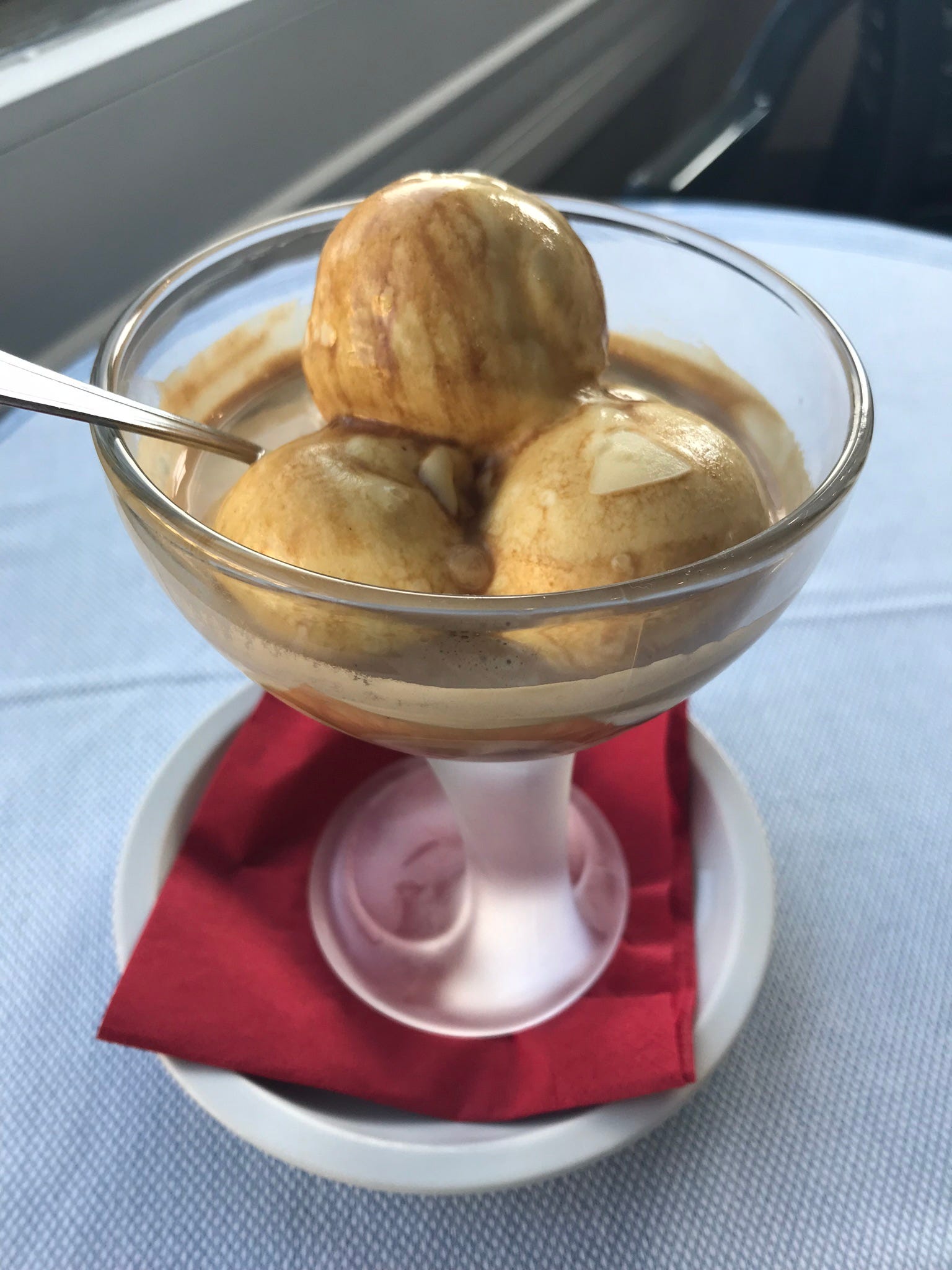
Espresso & Gelato, Together

Dear friends and fellow Italophiles:
The mid-August holiday known as Ferragosto has come and gone, but I’m still feeling the slow pace and the heat. Last month I promised to continue the topic of homes abroad, with insights from those who live only part of each year as expats. Alas, the best laid plans . . . . I’m neither mouse nor man, but my plans went awry. I hope to return to the topic next month.
It’s not just the heat. Some unplanned time in my hometown, Little Rock, due to my older sister’s passing, was followed by planned travels out West to a wonderful wedding celebration. Both trips were emotional roller coasters. The lows and highs, with lots of good, therapeutic talk with family and friends, kept me from my writing desk. As a result, I’ve decided this month to revisit a post from August several years ago. In the heat of August, my longings for gelato and espresso reign.
When I first wrote the earlier post, Covid was keeping me and many others from Italy. At that time many of you current readers (thank you, recent subscribers! ) knew nothing of my newsletter. “All Things Italy” was relatively new then. Through it, I was keeping alive my love of the country and its culture, revisiting photos and reflecting on the memories they elicited. I hope you enjoy the salvaged parts of that prior post now. I’ve enhanced it with a few additional thoughts, drawn from more recent experiences and a memory bank which keeps growing. If only we could be assured that our retirement accounts would do the same!
This issue includes a book review and some “off-the-beaten-path” travel advice related to espresso and other coffee drinks. I hope you'll stick with me through the end, perhaps see something new, and pass along any items of interest to your friends. Remember, simply clicking the “like” button does wonders for writers!
Coffee and Heat
You may be wondering how, with this heat, anyone could be thinking about coffee. Some of us are diehards. If my addiction didn’t start in Italy (that’s the subject of another essay), Italy at least contributed to it. In the chilly and damp month of February in Tuscany, I had my first espresso experience in 1982. It was my first morning in Italy, a caffè latte – made with stove-top warmed milk and espresso from a moka pot, also on the stove top. Later that same day, espresso capped my first authentic pranzo, or midday dinner. I had it black, with neither sugar nor milk. The next day, I added sugar.
Cappuccino made with a high-tech machine with steam to froth the milk was a later experience. To find the local bar, where one of our professors went for his cappuccino and cornetto every morning, I had to explore the neighborhood where I lived with a dozen or so other US students abroad. It didn’t take long.
I quickly learned the difference between what Italians made at home and what they consumed when “out.” (Later I learned from a Roman friend that most went “out” to consume their coffee. She asked, “why would anyone in Italy make coffee at home when it’s so easy and inexpensive to get it at the local bar?” )
The next summer, when I returned to Italy and worked as an au pair, I soon learned about super sweet caffè freddo. The Tuscan family I worked with kept two small pitchers in the fridge of their summer residence, a farm house in the hills near Pisa. One vessel was filled with local red wine—the chilled beverage called simply ”vino fresco.” The other contained sweetened espresso. Both were offered to the neighboring contadino when he showed up every afternoon near the kitchen door. This man, appearing way older than my grandfather, always chose the wine. My host mother, a high school English teacher on summer break, had the caffè freddo. I followed her lead.
As we sat for a while, I listened to the two Italians chat, trying to parse the sounds of his words—so different from her proper diction with me. The cold sugar and caffeine gave us a lift to get through the afternoon with the two small girls before her husband arrived late in the evening from his work in Florence.
Later that summer, with another family vacationing in Calabria, I met the lovely granita di caffè—delicious icy cold sweetness after a day on the beach. By age 21, then, I had learned about how to consume coffee in the heat as well as in the winter, both with and without milk. I had developed what some of my friends refer to as “a healthy addiction.” And I had a drink for all seasons.
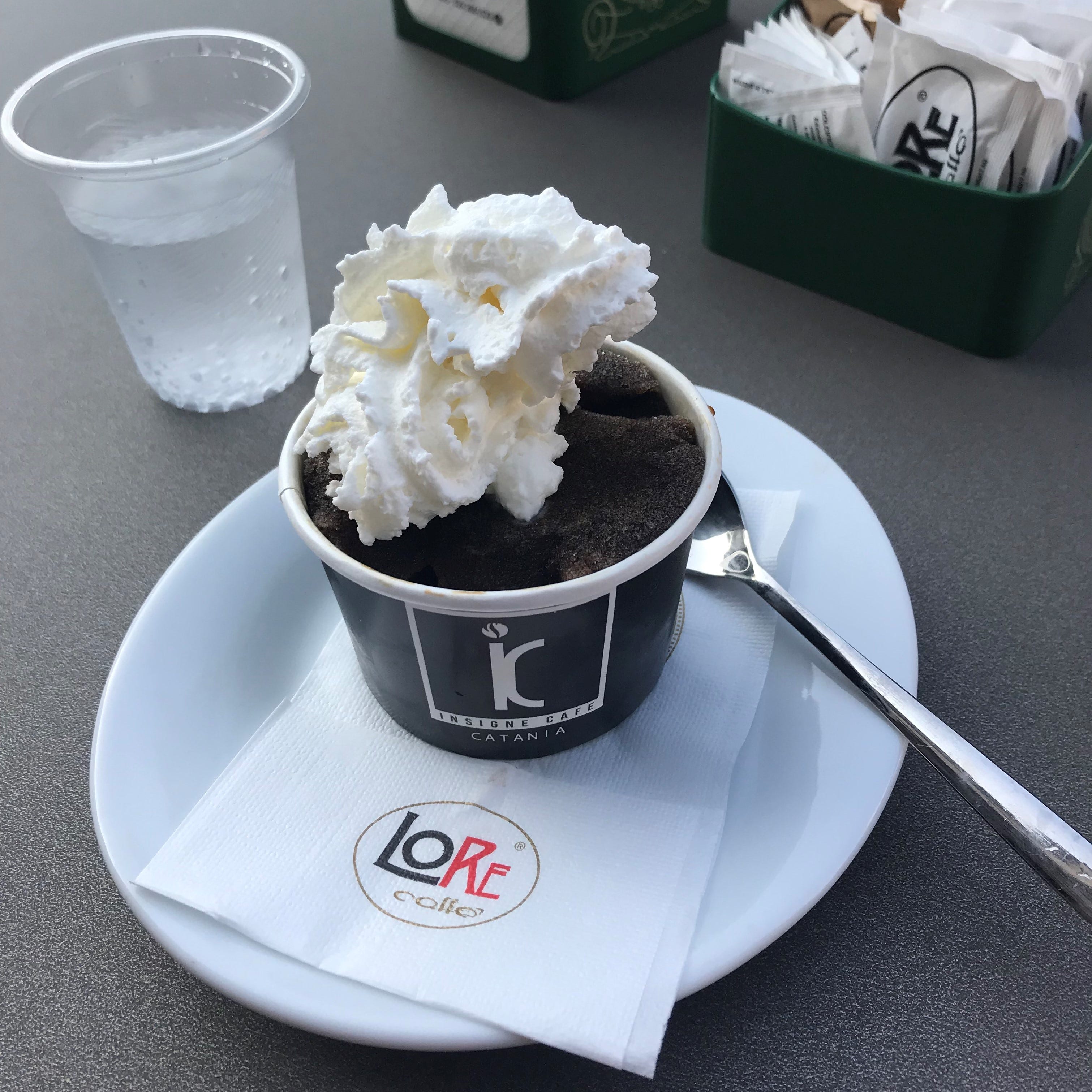
It was only much later that I was introduced to gelato affogato al caffè—ice cream smothered or drowned in hot espresso. Somehow the exact moment has escaped me. Visitors to Italy and citizens rave about gelato. I recall an apartment and research buddy at the American Academy in Rome venturing out every evening to get a cone. My husband does the same whenever he is with me in Italy. My favorite flavor has always been coffee, so it’s no surprise that gelato covered with espresso rises far above an American hot fudge sundae for me. No matter where I’ve ordered it—from the simplest corner bar in a small village in Piedmonte to an elegant spot on a grand piazza in Rome—the dish pleases.
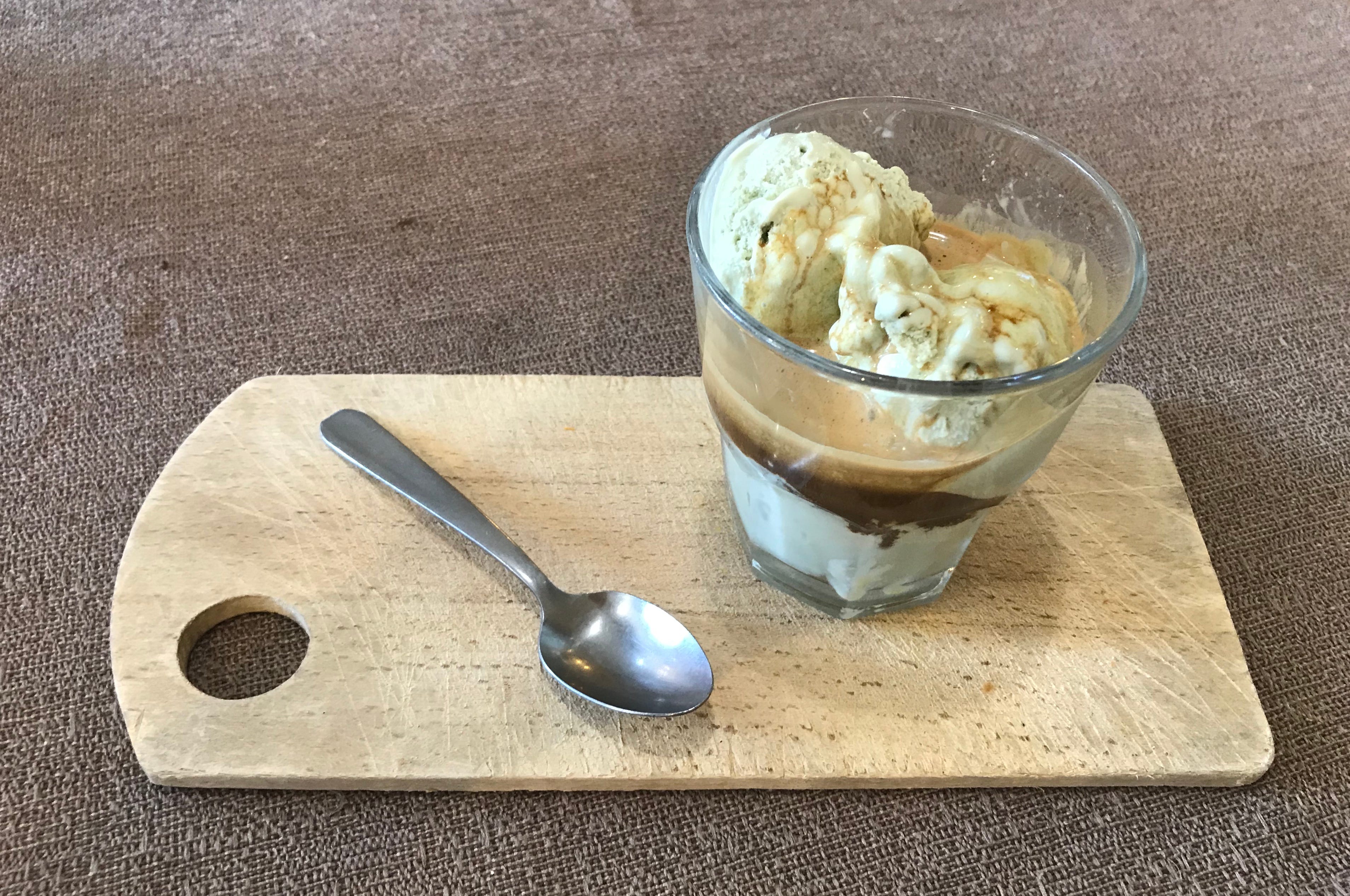
Gelato affogato al caffè is my go-to favorite. It should be easy to replicate, right?
I have had a few decent ones in the States. Several, I confess, have been made by my own hands, my own moka pot or electric espresso machine. They are good but never quite the same, perhaps because I have to do the work. Perhaps it’s the base ingredients. More likely, though, it’s the atmosphere and the flair with which it is served up. They are the missing ingredients when I am in the US.
Artist friend and neighbor Jacqueline Warren shared the photo below a few summers ago which prompted a brief online exchange.
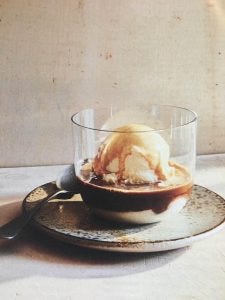
Summed up simply: those espresso-drowned scoops elsewhere just don’t compare. Don’t try this at home. Yet once again failing to heed a warning, when these pictures aren’t enough to convince me that I will fall short, I try once again.
No comments now on caffeine addiction and what it does to a body over the short and the long hauls. But I will say that in the heat of summer, there’s nothing like a late afternoon cold coffee, in one form or another.
Espresso: The Art & Soul of Italy
Should you be one who loves hot or cold, strong, Italian coffee even in summer’s hottest months, then you’ll probably enjoy reading Espresso: The Art and Soul of Italy, by Wendy Pojmann. Pojmann’s account traces the history of buying, roasting, and selling of beans, as well as the preparations of their extracts and the culture of their consumption. Have no fear, if you’re not an academic historian, like Pojmann (she teaches at New York’s Siena College, in Albany). She wrote this book with an engaging voice for a general audience. And she organized the slim volume—a social and cultural history—by region. It’s also then a bit of travel and foodie book. Pojmann enlivens the history in journalistic style with interviews—conversations with owners of famous coffee houses, from Turin in the Piedmont to Naples in the Mezzogiorno.
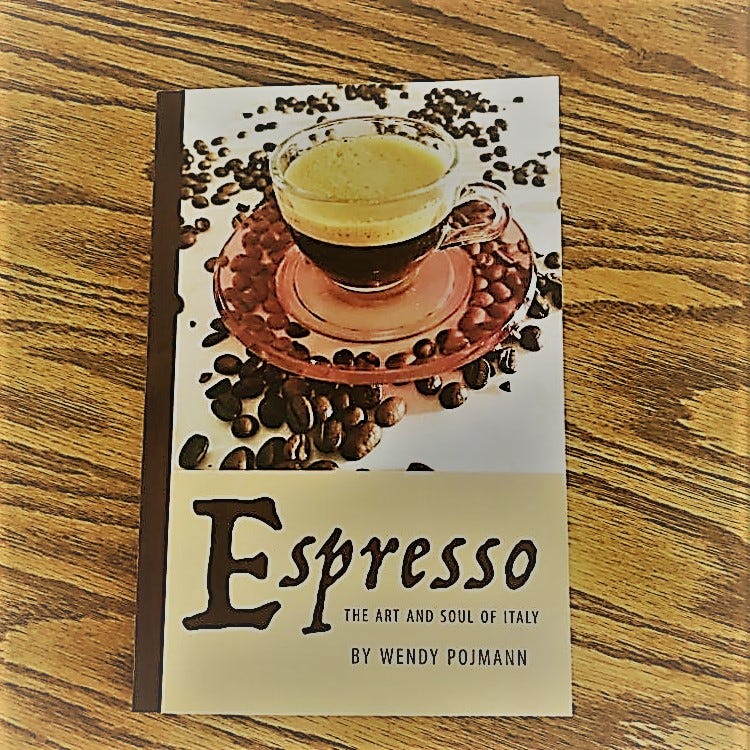
Pojmann’s descriptions and analyses go beyond describing how the making of coffee has changed through the decades, as technology has offered almost endless options for espresso-making at home. She also discusses the politics of the public places of coffee consumption. Frequent travelers to Rome and students of Americans in Italy know the famous Caffè Greco, just a few steps away from the Piazza di Spagna and the Spanish Steps. (It’s been the subject of numerous articles and at least one podcast.) This famous spot and other coffee houses—such as Caffè Al Bicerin in Turin and the Gran Caffè Gambrinus of Naples— provided sites for likeminded political leaders, writers, and artists to gather and talk. Some plotted revolution, others social reform. The coffee houses were not just about consuming caffeinated beverages.
Today these historic coffee houses offer elegant decor and some overpriced beverages. You’re paying for the atmosphere and experience, of course, not the beverage alone.
Beyond politics, Pojmann’s book gives attention to coffee house décor. Initially meant to imitate the saloni (grand living rooms) of the homes of the Italian elite, the grand coffee houses of the nineteenth century offered an inviting atmosphere, with lush upholstery and lighting, gilded wood furniture and trim, and gleaming mirrors. Those without the means or environment to invite others into their “living rooms” at home could meet them in an impressive and inviting locale in the city center.
Among my favorite bits of information Pojmann provides are details about Turin’s famed bicerin—the creamy, thick, hot chocolate, espresso drink which I have yet to experience. I’ve only visited Turin in the summer, when bicerin was not on my mind.
Thanks to Pojmann’s book, during my stay in Turin in July 2022, I had some new tastes to try and some new coffee houses to visit. The city’s many loggie serve as popular promenades for people of all types, protecting pedestrians from the sun in summer and snow in winter.
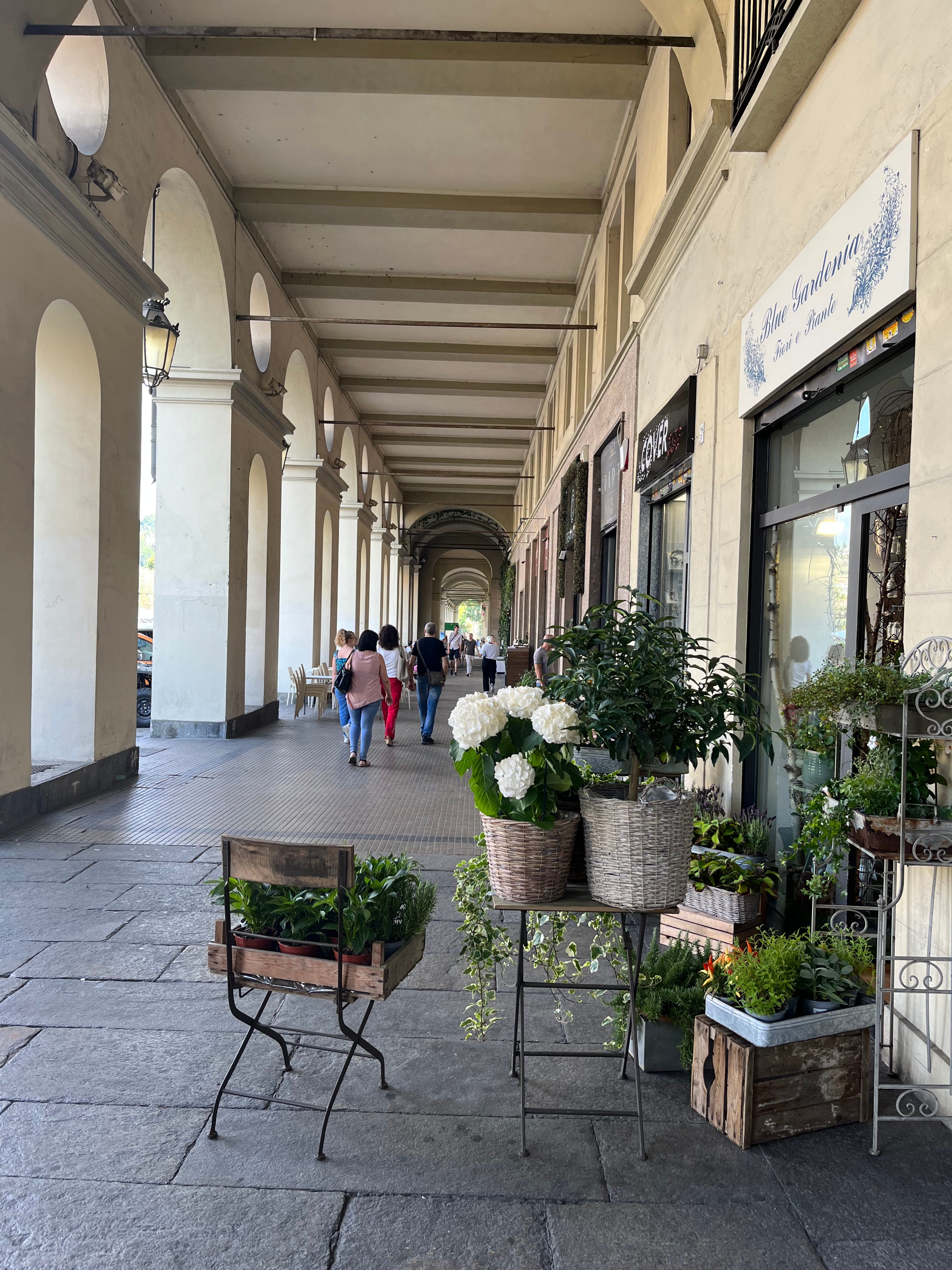
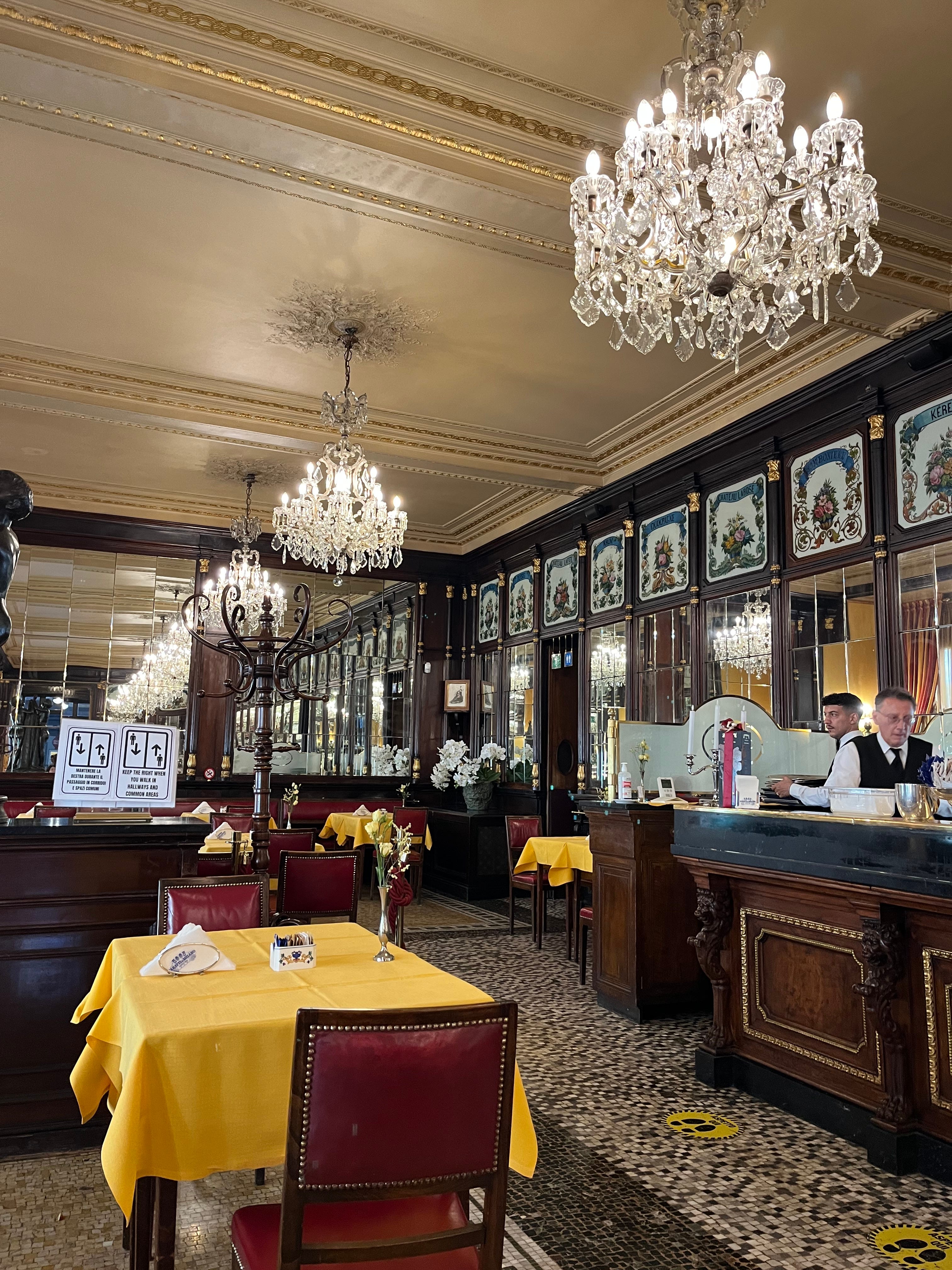
I knew that even in the lunchtime or late-afternoon heat, I could stroll for almost an hour in the loggia's shade. And then, if I wished, I could stop into one of the famous historic coffee houses, such as Baratti e Milano, which provide the city's renowned hot chocolate beverage, the bicerin, and pastries in elegant surroundings.
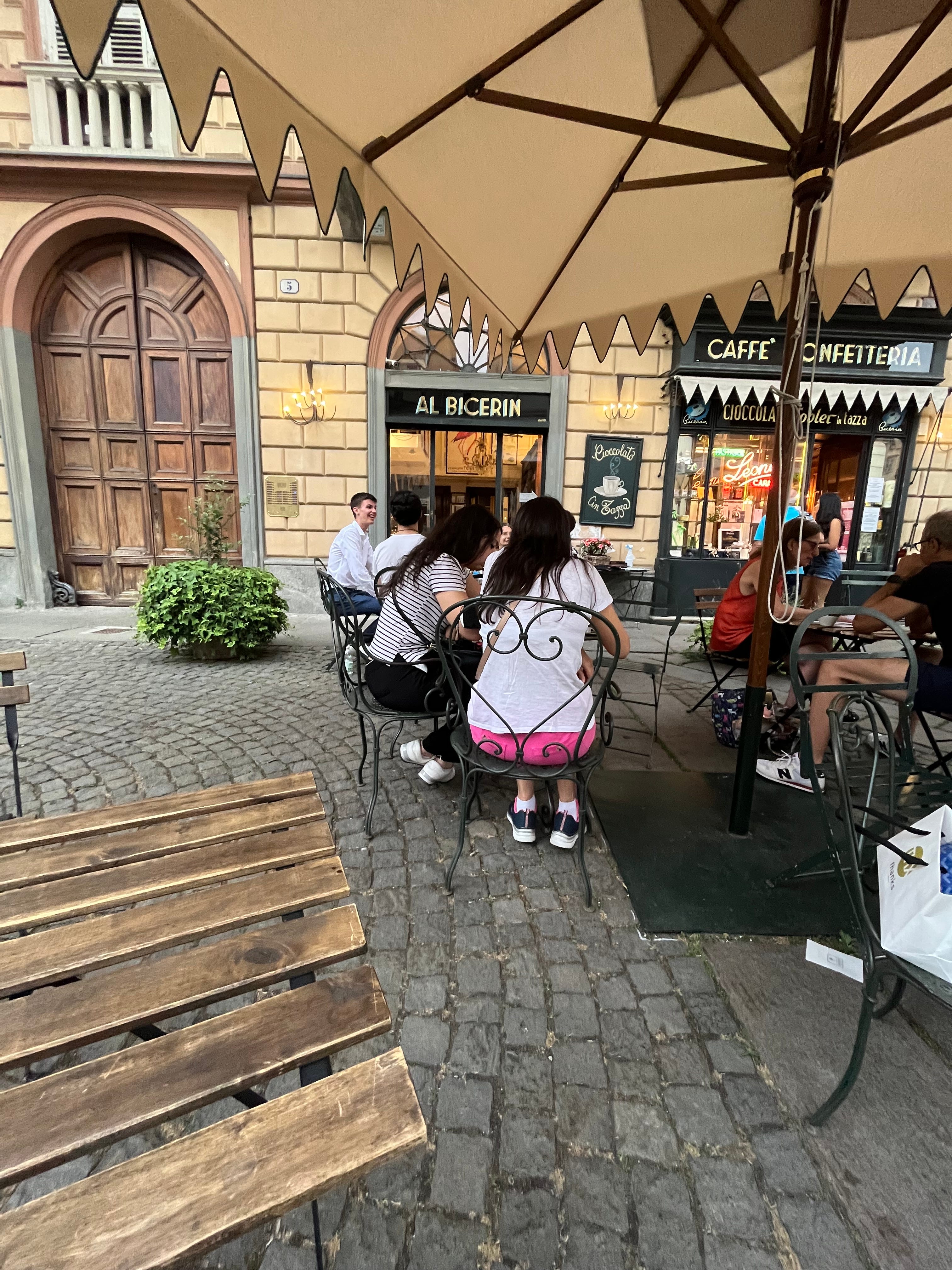
Or I could opt for a less-expensive environment and refreshment, still under the loggia or elsewhere, and watch people saunter by. Fortunately, in the summer months the coffee houses offer cold versions of the bicerin. I enjoyed something like a cold chocolate pudding at the historic Caffè Al Bicerin, where political leader Camillo Cavour hung out during the mid-nineteenth century.


The afternoon I visited Al Bicerin, a summer temporale (thunderstorm) drove the servers to close the umbrellas and the customers inside.
On a positive note, without the sudden rain and wind, I would not have seen the portrait of Count Camillo di Cavour and read the marker below the portrait. Nor would I have had a chance to sit in his favorite corner of the cosy cafe. I knew of Cavour’s work with political reform, not from Pojmann’s book, but from my research on US women in nineteenth-century Italy.
With help from Pojmann’s Espresso book, I knew where to look for the shadows of such reformers as I tried versions of my favorite beverage. You can see from the title page of my copy of Pojmann’s book that she refers to me as a “sister” and “Italophile.”
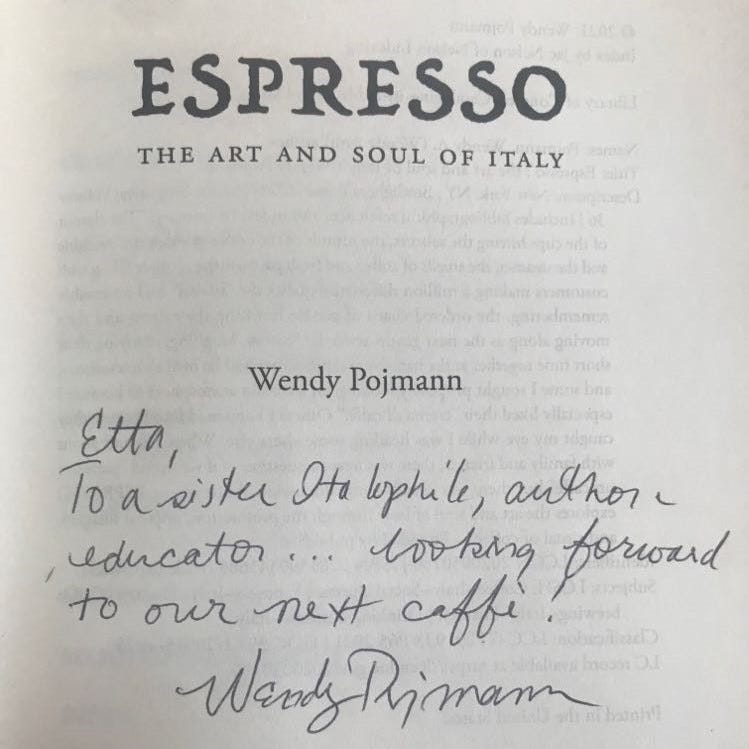
And, as she suggested, we have had an espresso or two since I bought a copy of her book. Most recently, she introduced me to the Bar Baffo, her favorite place in Rome’s Trastevere to consume a cappuccino and cornetto. I highly recommend it, next time you’re in the area.
If you’re a coffee lover and you’re interested in a related way to tour Italy, buy a copy of Pojmann’s work and start planning your itinerary. And, if you need any advice, I’m happy to offer what I can.
Until next month, I hope you will enjoy a cold coffee or two as much as I. In September, I hope to return to the promised topic of shorter-term life abroad. I’ll be anticipating then a return to Tuscany, for a two-month stay in Pisa and a focus on more literary and historical topics.
If you have any memorable coffee experiences from time in Italy—even the horrible ones are fun to know about—I’d love to read about those in the comments.
As always, if you liked what you read here, please click on the like button and/or reshare with friends. It keeps me going as much as coffee!
Until September, goda ti bene (enjoy yourself!),

I LOVE gelatto affogato! I haven’t had it in Italy, though. Next time!
I would love to do a "coffee tour" of Italy with you! Caffè per sempre!